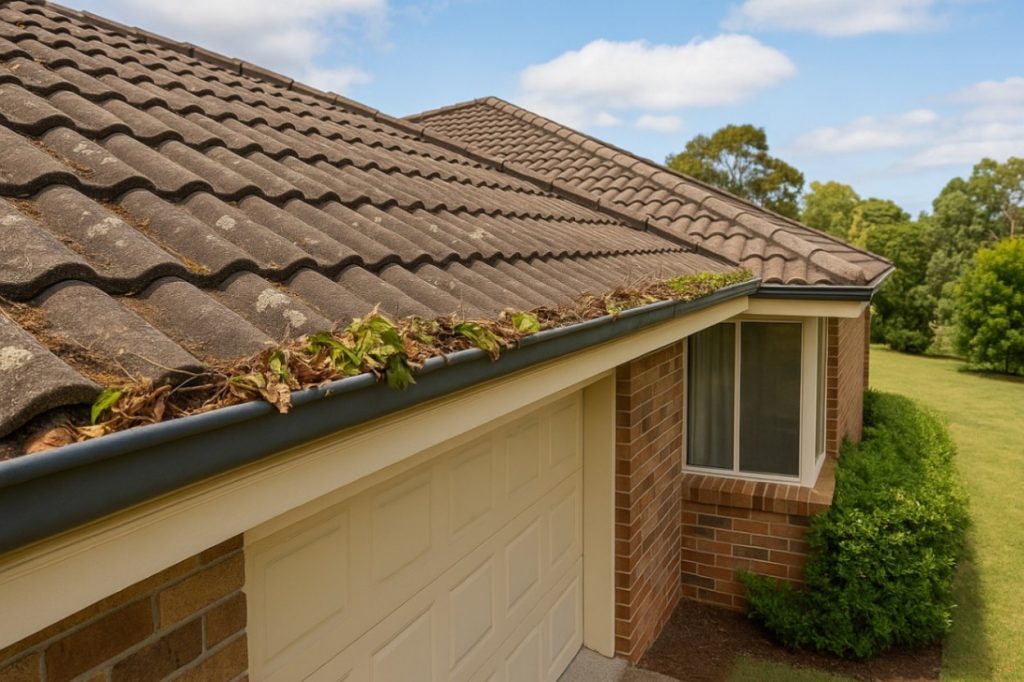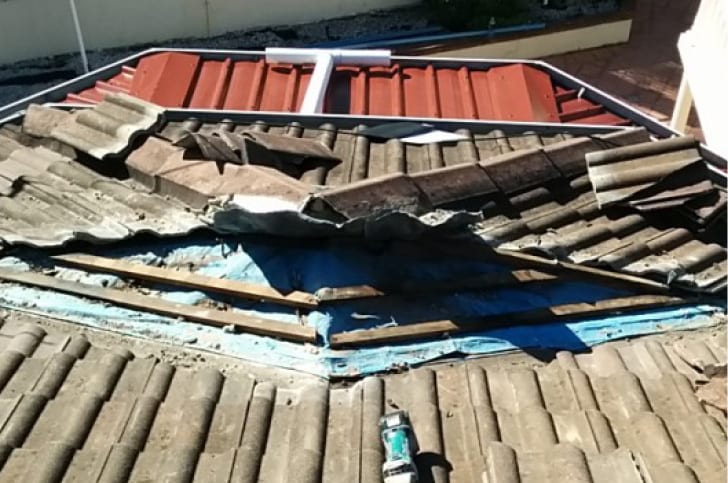
A faded roof is not a failing roof. That one sentence would save a lot of Brisbane homeowners a lot of money.
I am Caleb, The Roof Man. I work on concrete tile roofs across Brisbane’s Southside, Bayside and Logan, and I have been doing it for over 35 years. The call I get most often in spring goes something like this. Someone has had a flyer in the letterbox or a knock at the door. They have been told their roof is tired, porous, past it. They have a quote for a full restoration. They want to know if they should do it.
I am Caleb, The Roof Man. I work on concrete tile roofs across Brisbane’s Southside, Bayside and Logan, and I have been doing it for over 35 years. The call I get most often in spring goes something like this. Someone has had a flyer in the letterbox or a knock at the door. They have been told their roof is tired, porous, past it. They have a quote for a full restoration. They want to know if they should do it.
Sometimes the answer is yes. Often it is not.
The problem is that restoration, repair and painting get sold as one thing, and they are three different things. You can spend several thousand dollars having a roof cleaned and recoated and still have the exact leak you started with. You can also spend a few hundred dollars replacing four cracked tiles and fixing a run of pointing, and have a roof that performs perfectly for another decade while still looking a bit faded.
This article walks through the difference, what the evidence actually says about painting concrete tiles, and how to work out which one your roof needs.
The principle I work to is simple. Do not restore a roof because it looks old. Inspect it, find what has actually failed, repair that, and treat appearance as a separate decision.

Roof Restoration vs Repair: What Is the Difference?
A repair fixes a specific fault. A restoration is a programme of work across the whole roof. The gap between them is scope, not quality.
What is a roof repair?
A repair deals with a defect you can point at. On a concrete tile roof in Brisbane, that usually means one of these.
The work is targeted. You find the fault, you fix the fault, you leave the rest of the roof alone because the rest of the roof is fine.
What is a roof restoration?
Restoration is broader. Depending on who you ask and what they sell, it can include a full inspection, high-pressure cleaning, replacing broken tiles, re-bedding ridge caps, repointing, valley repairs, and in some packages a coating or colour treatment.
Here is the part that matters, and it is where a lot of homeowners get caught out.
Restoration is not a synonym for painting. A roof that has been cleaned and sprayed has not been restored. It has been cleaned and sprayed. If the bedding under the ridge caps was crumbling before the coating went on, it is still crumbling under the coating. Paint does not hold a ridge cap down.
When restoration is defined by the functional work it includes, it is a legitimate and useful service. When it is defined by the colour at the end, it is a paint job with a better name.
When Is Roof Repair the Better Choice?
Targeted repair makes sense when the problem is contained. That is more often than most homeowners expect.
Repair is usually the right call when:
Two examples from the kind of job I see every week.
A house in Rochedale with a stain above the kitchen. On the roof, three cracked tiles and about two metres of broken pointing on the nearest hip. Everything else is in good order. That is a repair. Replacing the tiles and repointing that run fixes the leak properly, and the rest of the roof does not need touching.
A house in Carindale with ridge caps rocking on three separate lines, mortar grit washing into the gutters, a rusted valley and a dozen cracked tiles spread across two faces. That is no longer a repair. That is widespread deterioration, and it is worth pricing broader work.
The difference is not the age of the roof. It is how many things have actually failed.
When Does a Roof Restoration Make Sense?
Restoration becomes reasonable when deterioration is spread across the roof rather than sitting in one place. At that point, fixing faults one at a time costs more in call-outs than doing the lot in one visit.
A restoration worth paying for is defined by the work it contains. On a concrete tile roof, that scope might include:
That is the test I would apply to any restoration quote you receive. Read the scope and ask what each line actually fixes. If the quote is mostly cleaning and coating with a vague line about minor repairs, you are buying appearance. If it is mostly tile work, bedding, pointing and valleys with coating offered separately, you are buying a roof that works.
Both can be valid purchases. You just need to know which one you are making.
Does a Concrete Tile Roof Actually Need to Be Painted?

Not necessarily. For concrete roof tiles, painting is not automatically required to keep the roof performing.
That statement sits awkwardly against a lot of roofing advertising, so it is worth looking at where it comes from.
CSIRO published an information sheet on concrete roofing tiles that deals directly with this question. It was written in response to the claims that commonly circulate about ageing concrete tiles. Its position, in summary, is that weathering and the loss of the original surface finish cause negligible change in tile strength and do not significantly increase porosity. It also notes that concrete products generally become stronger and less porous over time, in the absence of extreme frost or air pollution. Neither of those is a factor in Brisbane.
On painting specifically, the CSIRO information treats it as an appearance decision. There is no need to paint if you are not concerned with how the roof looks. If you do paint, repainting is required periodically to maintain that appearance, and the material suggests a five to ten year cycle. It also raises the economics of repainting as something a homeowner should weigh up.
The Western Australian Government reaches a similar conclusion independently. Its Building and Energy fact sheet Roof coating, do you really need it? addresses the same myths head on. It states that tiled roofs do not generally need painting or coating unless the owner wants to improve the appearance or change the colour. It also lists the claim that prolonged weathering makes concrete tiles porous as untrue, and notes that CSIRO does not endorse roof coating products or the businesses selling them.
What this does not mean
It does not mean an ageing concrete tile roof needs no maintenance. That would be the opposite overstatement, and it would be just as wrong.
Concrete tiles hold up well. The things around them do not. Mortar bedding breaks down. Pointing cracks and falls out. Valleys rust and block. Tiles crack when someone walks them carelessly. Clips corrode and let go. Those are real failures with real consequences, and no amount of surface colour addresses any of them.
So the useful split is this.
Functional problems, which need fixing: cracked tiles, displaced tiles, failed pointing, failed bedding, blocked or corroded valleys, storm damage, missing tile clips.
Cosmetic issues, which are a choice: faded colour, discolouration and staining, a dated look, wanting a different colour.
What Does Roof Paint Actually Do to Concrete Tiles?
It changes how the roof looks. That is a genuine thing to want, and I am not dismissing it.
A coating can give you a different colour, even out patchy discolouration, cover decades of weathering and lift the look of the house from the street. If you are selling, or you have just repainted the exterior and the roof now looks wrong against it, that is a reasonable reason to spend the money.
What a coating does not do is waterproof the roof. A tile roof sheds water through the overlap and fall of the tiles themselves, and through the valleys and the sealed ridge lines. That system either works or it does not, and a film of colour on top of the tiles is not what makes it work.
It is also worth knowing what you are signing up to. Once a roof is coated, keeping that appearance means recoating periodically. The CSIRO material puts that at roughly five to ten years. So the first spray is not a one-off expense, it is the start of a cycle.
Claims to be sceptical of, because they do not hold up:
If a quote leans on any of those, ask the person to show you the defect they are solving. Then ask what fixes that defect.
Roof Restoration vs Roof Painting: They Are Not the Same Thing

Three different services, sold under names that overlap. Here is how they actually compare.
| Roof Repair | Roof restoration | Roof painting | |
|---|---|---|---|
| What it does | Fixes specific defects | Addresses deterioration across the roof | Changes or refreshes appearance |
| Scope | Usually localised | Broader, multiple components | Surface only |
| Tiles | Replaces broken tiles | May replace tiles throughout | Does not replace damaged tiles |
| Ridge caps | Repoints failed sections | May include full re-bedding and repointing | Coats over whatever is underneath |
| Valleys | Repairs or replaces the affected run | May include valley repairs | Does not address valleys |
| Leaks | Targets the identified source | Addresses the causes found at inspection | Does not fix an underlying leak |
| Driven by | A fault you can point at | Condition across the roof | Preference |
The message to take from that table is narrow but important. Buying a coating does not mean the roof has been restored. If the scope sheet does not list the repair work, the repair work is not happening.
How Much Does Roof Restoration Cost Compared With Repair?
There is no single Brisbane price, and anyone who gives you one over the phone has not seen your roof.
What genuinely moves the number:
That last one is the reason I do not quote from the kerb. Two houses on the same street, built the same year, with the same stain on the ceiling, can come back with very different scopes.
The thing I would say about comparing quotes is this. The cheapest option is not always the smallest number. The right option is the smallest scope that properly fixes what has actually failed. A small repair that solves the leak is better value than an expensive restoration that makes the roof look newer and leaves the valley rusted.
If you want indicative figures for the repair side, our guide to roof leak repair costs in Brisbane sets out the ranges I see most often.
Should You Repair, Restore, Paint or Replace?
Four options, four sets of conditions. Work down the list and see which one describes your roof.
Choose targeted repair when
Consider restoration when
Consider painting or coating when
Consider replacement when
One thing I would not do is pick based on age alone. I have worked on forty year old roofs that needed four tiles and a run of pointing. I have also seen roofs barely twenty years old that had been walked on by every trade in the phone book and needed far more. Condition decides, not the date on the build plaque.
Brisbane Concrete Tile Roofs: What Actually Needs Attention?

Our climate is hard on roofs. It is just hard on specific parts of them, and the colour of the tiles is not one of those parts.
Summer storms do the most damage in the shortest time. High winds lift and shift tiles, crack pointing along exposed ridge lines and dislodge ridge caps. Hail chips and cracks tiles that were otherwise fine. Then the heavy rain that follows finds every gap the storm just opened.
The heat cycle matters too. Roofs expand and contract hard across a Brisbane year, and old rigid cement pointing has no give in it. It cracks, then it crumbles, then it washes into the gutter. Mortar grit in your gutters is one of the most reliable signs that pointing is on the way out, and it is something you can check from the ground.
The other common one is debris. Leaf litter builds up in valleys, holds water against the metal, and the valley rusts through. On properties with good tree cover, around Gumdale, Chandler and Burbank especially, that is the leak I find more than any other.
And a lot of cracked tiles are not weather at all. They are footprints. Solar installers, antenna technicians, plumbers and pest controllers all walk roofs, and not all of them know where to put their weight.
Every one of those is a functional repair. None of them is solved by how the roof is coloured.
How to Avoid Paying for Work Your Roof Does Not Need
You do not need to know roofing to protect yourself. You just need to ask the right questions and insist on seeing evidence.
Before you approve anything:
Get a proper inspection first. Someone should be on the roof, looking at the tiles, ridge caps, valleys, bedding, pointing and clips. Not standing in the driveway pointing upward.
Ask for photographs of every defect. If a roofer tells you the pointing has failed, you should be able to see it. A written report with images is the standard to expect.
Ask what problem each line of the quote solves. This one question does most of the work. If an item does not have a clear answer, question whether it belongs.
Make them separate repairs from cosmetic work. They should be priced as separate lines so you can see what you are buying.
Ask directly whether the painting is optional. The answer tells you a great deal about who you are dealing with.
Get the scope in writing. Not a figure on the back of a card. An itemised list of what will be done.
Compare like for like. Two restoration quotes can differ by thousands because one includes re-bedding and the other does not. Line up the scopes, not the totals.
Check the licence. Roofing work in Queensland is licensed through the QBCC, and you can search the register yourself before anyone starts.
If you want the full version of this, including the door-knocking tactics that come around after every storm season, we have written separately about roof repair scams in Brisbane.
FAQ
Frequently Asked Questions
Find Out What Your Roof Actually Needs
If someone has told you your roof needs restoring, get a second opinion before you spend the money.
I will come out, get on the roof, and look at the tiles, ridge caps, bedding, pointing, valleys and clips. You get photographs of anything I find and a written report explaining what is urgent, what can wait, and what is purely about appearance. If the answer is that your roof needs four tiles and a run of pointing, that is what I will tell you.
The inspection is free and there is no obligation attached to it.
About the author
Caleb is the owner of The Roof Man and has worked on concrete tile roofs for over 35 years across Brisbane’s Southside, Bayside and Logan. QBCC licence 1064213.
Sources
CSIRO Information Sheet for Concrete Roof Tiles
Roof coating, do you really need it?, Building and Energy, Government of Western Australia