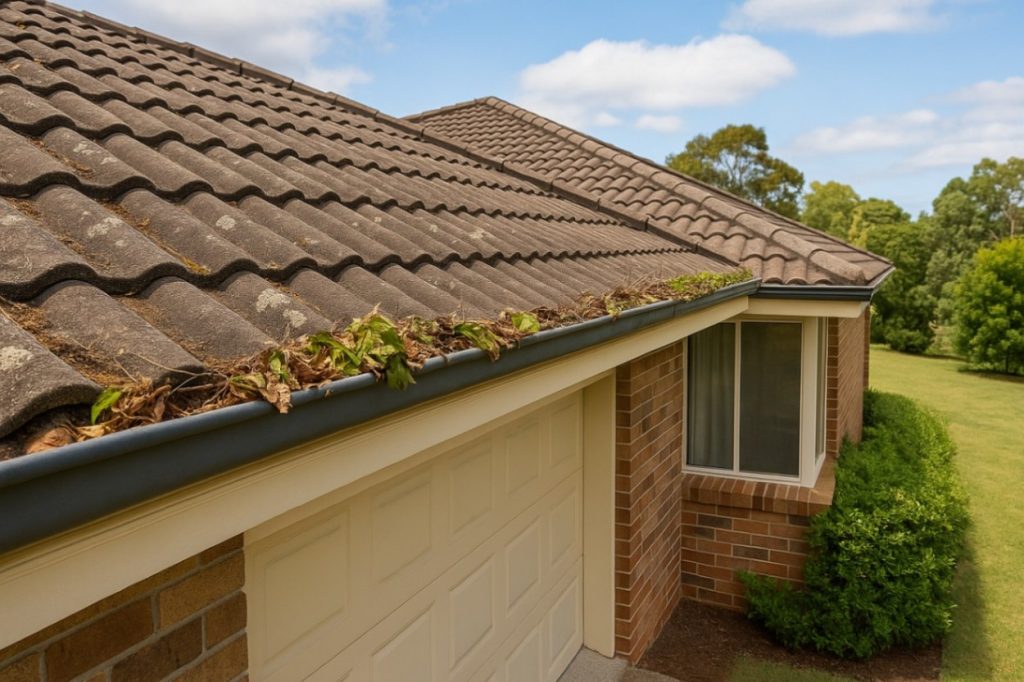
A homeowner’s guide to protecting your concrete tile roof through storm season, from first warning signs to getting the right repair done right.
Storm Season Active (Nov-Apr)
Don’t wait for a leak to grow. Book a free inspection before your next downpour. Call 0404 101 567 or book online.
If you’ve noticed a water stain spreading across your ceiling, heard tiles rattling after a storm, or spotted cracked ridgeline mortar during your last gutter clean, you’re dealing with a roof that needs attention. Roof Repair Brisbane homeowners keep putting off can quickly turn into a much bigger problem.
Brisbane’s subtropical climate is genuinely hard on roofs. UV exposure bakes mortar and crumbles pointing. Hailstorms crack tiles. Strong winds dislodge ridge caps and work tile clips loose. And once water finds a way in, even a small entry point, it tends to travel through sarking, timbers, and ceiling plaster before it ever drips through your ceiling rose. By the time you see the stain, the damage is often well established.
This guide covers everything Brisbane homeowners need to know about roof repairs: common warning signs, what to do in an emergency, how to choose between repair, restoration, and replacement, and how to find a roofer who’ll give you straight answers.
Common Roof Problems Brisbane Homeowners Ignore Too Long
Most roof failures don’t happen overnight. They build slowly through seasons of heat, UV, and storm cycles, until one heavy downpour turns a minor issue into an emergency repair. Here are the warning signs worth acting on early.
Ceiling Stains & Mould Smells
Water stains don’t always mean a direct leak above them. Water can track along rafters, timbers, and sarking for metres before appearing on your ceiling. A musty smell in the roof space often points to moisture that’s been sitting long enough to grow mould, and mould in the roof space can spread quickly into insulation and ceiling materials.
Cracked or Slipped Tiles After Wind
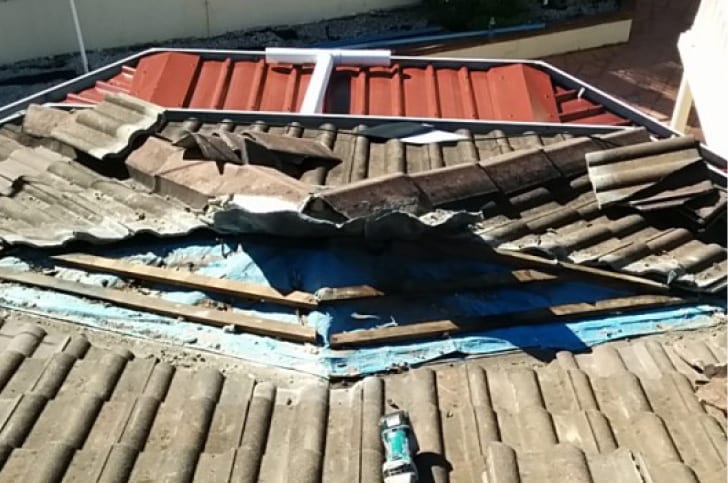
Even one cracked or displaced tile after a wind event creates an open entry point for water. Concrete tiles can also degrade around the edges with age, making them brittle and prone to cracking under foot traffic or impact. If you can see a tile that’s visibly out of alignment from ground level, it’s worth having it checked.
Loose Ridge Caps & Failing Pointing
The mortar (pointing) that beds your ridge capping dries out and cracks over years of thermal movement. Once ridge caps lift or rock, water washes straight down into the bedding and into your roof space. This is one of the most common roof leak causes in Brisbane, and one of the most underestimated, because pointing failure isn’t always visible from the ground.
Blocked or Failing Roof Valleys
Valleys channel large volumes of water off your roof. If debris builds up or the valley flashing corrodes and separates, water backs up and pushes under tiles. Roof valley repair is a common post-storm job across Brisbane suburbs, particularly after significant rainfall events.
Sagging or Damaged Sarking
Sarking (the foil or membrane under your tiles) acts as a secondary water barrier. Punctured or collapsed sarking means any water that gets past your tiles has a clear path into your roof framing and insulation.
What To Do If Your Roof Is Leaking Right Now
A leaking roof during a storm isn’t the time for a calm cost comparison. Here’s what to do immediately while you wait for conditions to improve.
Emergency Checklist:
Some roofing contractors can apply temporary measures (tarpaulins or emergency sealant patches) to stop water ingress while a proper repair is scheduled. This isn’t a permanent fix, but it protects your home until a full assessment and repair can be safely completed. For emergency Roof Repair Brisbane homeowners can rely on, call us as soon as conditions are safe.”
Roof Repair Vs Roof Restoration Vs Roof Replacement (Brisbane)
Not every roofing problem requires the same solution, and not every roofer will give you an honest read on which one you actually need. Here’s how to think about it, and how to know when Roof Repair Brisbane-wide specialists recommend one over the other.
| Option | When it applies | What’s involved |
|---|---|---|
| Repair | Isolated, localised damage: one leak source, a few cracked tiles, failed pointing in a section, a single valley issue | Targeted fix of the specific failure point. Fastest and most cost-effective when the rest of the roof is structurally sound. |
| Restoration | Widespread surface wear: widespread pointing failure, faded or porous tiles, general deterioration but structurally viable roof | Full re-point, re-bed, clean, and re-coat. Often includes minor repairs found during the process. Extends roof life significantly. |
| Replacement | End-of-life roof: repeated failures, severe structural damage, tiles that can no longer be matched or sourced, major timber damage | Full strip and relay of the roof system. Highest upfront cost, but the only viable path when restoration or repair won’t hold long-term. |
The right call depends on a proper inspection, not a drive-by quote. A good roofer will give you a clear recommendation with photo evidence, not just push the highest-value job.
Concrete Tile Specialist — Worth Knowing Upfront
The Roof Man specialises in concrete tile roofs. If you have a Colorbond, corrugated iron, or terracotta tile roof, we’ll be upfront with you rather than take a job outside our expertise. Our focus means we know concrete tile systems inside out – materials, failure patterns, repair methods, and matching tiles for your suburb.
What Does A Proper Roof Repair Look Like?
A legitimate roof repair isn’t just someone on the roof with a tube of silicone. Here’s what a thorough process looks like, and what you should expect at each step.
Step 1 — Thorough Roof Inspection
A full walkover of your roof, not just the visible leak point. Common failure areas like valleys, ridge caps, flashings, and tile clips are checked systematically. At The Roof Man, we photograph findings and provide you with a clear visual record of what we found and where. No vague “you’ve got a leak somewhere up there.”
Step 2 — Clear Explanation of Findings
We walk you through what was found, what’s causing the problem, and what your options are, including honest advice on whether repair, restoration, or replacement makes more sense for your situation. You get photo evidence, not just a verbal summary.
Step 3 — Repair Plan & Itemised Scope
Before any work starts, you receive a clear scope of what’s being repaired, how, and why, so you can make an informed decision. No surprises mid-job, and no vague “may include additional work” clauses.
Step 4 — Repairs + Final Check
Work is completed to scope. A final check confirms the repair area is properly sealed and any surrounding tiles or components disturbed during access are correctly reset. We don’t leave a clean repair sitting next to a loose tile we bumped getting there.
What Affects Roof Repair Costs In Brisbane?
Every roof is different, which is why specific price estimates without an inspection are rarely reliable. The cost of Roof Repair Brisbane properties require varies considerably depending on a combination of factors. Here are the main cost drivers:

As a general principle: repairing a roof early is almost always far less expensive than waiting until problems compound. A cracked tile and a failed pointing section is a routine repair. The same issues left through a storm season, with water penetrating framing and ceiling materials, becomes a significantly larger job.
A proper free inspection gives you a clear picture of what’s actually going on before any money changes hands. That’s the right starting point.
How To Choose A Roofer In Brisbane
Brisbane has no shortage of roofing contractors, but quality varies considerably. Here’s a practical checklist to use when comparing your options.
How Often Should You Inspect Your Roof In Brisbane?
Most homeowners only think about Roof Repair Brisbane-wide after something goes visibly wrong. A more effective approach is to build in proactive inspections.
At a minimum, consider a professional inspection:
- Before storm season (October–November) — to identify any deterioration that will be exposed under heavy rain and wind
- After a significant storm event — especially after hail, or wind events above 80km/h, when tile clips, ridge caps, and valleys are most likely to fail
- Every 3–5 years as a routine preventative check — pointing, tile condition, valley wear, and clip integrity all age gradually
- Before buying or selling a property — an independent roof inspection can reveal hidden issues that affect price or settlement conditions
For a detailed breakdown of inspection schedules and what each inspection should cover, see our guide: How Often to Inspect Your Roof in Brisbane.
FAQ
Frequently Asked Questions
Ready To Protect Your Roof?
Get a free inspection with photo proof of findings, honest repair advice, and a clear scope before you commit to anything.